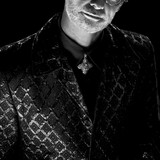
Murucutu’s Future of Brazil

© Claudio Angehrn

© Claudio Angehrn

Claudio Angehrn, or MURUCUTU, is a globetrotting photographer whose travels have taken him all the way from his hometown in Switzerland to the Northeast of Brazil, where he’s pursuing a new, and inspiring, project. Continue reading

Tags: ,
Posted in portrait photography   Leave a comment

Santa Fe Workshops ANIMALS Photo Contest Winners

Director's Award winning entry by Elliott McDowell entitled "Storm Eye." ©Elliott McDowell

Director’s Award winning entry by Elliott McDowell entitled “Storm Eye.” ©Elliott McDowell

The Santa Fe Workshops have announced the winners of their ANIMALS Photo Contest.

The Director’s Award winner is Elliott McDowell for his entry entitled “Storm Eye.” Other winners can be found here.

In addition to winning a space in the workshop of his choice in Santa Fe, including tuition, fees, and meals, McDowell wins a Sekonic L-478DR LightMaster Pro.

Congrats to Elliot McDowell and all winners of this photo contest!

Tags: , ,
Posted in Contest   Leave a comment

Become the Master of Off-Camera Flash

062013

Controlling Flash for Interior and Exterior Portraits

Is off-camera flash still something that causes you trouble? Do you find yourself constantly chimping your camera LCD and making adjustments for every shot you take? Does mixing flash with sunlight cause you nightmares?

If you want to become a master of off-camera flash, join us for this free live video Webinar sponsored by Sekonic. Host Joe Brady will take us through the process of controlling off-camera flash for both interior portraits and for adding fill-light to outside shots. With just one flash, a light meter and a pair of PocketWizard radio triggers you can get consistent and beautiful results every time.

Joe will also demonstrate how basic light shaping tools can change the look of your lighting, and how much control you have over the quality and shape of the light. If you’re not yet a master of off-camera flash, this will be time well-spent.

Tags: , ,
Posted in Webinar   Leave a comment

Trusting Your Craft with Jamie Maldonado

© Jamie Maldonado

© Jamie Maldonado

Jamie Maldonado is an editorial and fine art photographer working out of East Texas whose speciality is environmental portraiture, where he aims to portray the heart and soul of his subjects using richly layered locations. He started out using a handheld meter for his film work, but has since found that it gives him an edge while working in digital as well. His story and images follows.

Though I learned the basics of photography on film, I became serious about my craft in the digital age. It was easy to think the histogram and preview on the camera back was enough to replace a handheld light meter. However, the more I integrate an external meter into my work, the more I discover its value.

I learned most of what I know about photography from O. Rufus Lovett at Kilgore College in Kilgore, Texas. Rufus is an accomplished photographer and printmaker, and helped teach me the value of previsualization and getting the shot at the camera.

I began using my L-508 Zoom Master (note: discontinued – modern version is the L-758DR DigitalMaster) when I purchased a long-coveted Hasselblad film camera a couple of years back. Having no built-in meter with the camera, it was a no-brainer to have such a versatile tool to use. Though I felt a pull to use digital cameras to meter and preview, I quickly learned how cumbersome and detractive the practice is. There is a beautiful freedom to just having the camera and meter in hand, trusting my craft, like Rufus has taught me.

Continue reading

Tags: , ,
Posted in portrait photography   Leave a comment

Measuring Light for Pinhole Photography

Bob St. Cyr was granted the Canadian Association of Photographic Arts Maple Leaf and Associate Fellowship Awards for photographic achievement, service and exceptional contributions to photography. Bob has also won national and international awards for his photography. Although Bob is familiar with digital photography and employs it from time-to-time, he primarily prefers to work with medium and large film format lens and pinhole cameras. He also enjoys the challenge of constantly working to better himself not only as a photographer but as a darkroom craftsman from processing his film to black and white printing. His work has appeared in Canadian Camera Magazine, Pinhole Photography, and Photo Life Magazine, among other publications. What follows are his thoughts on measuring light for pinhole photography.

©Bob St. Cyr

©Bob St. Cyr

Even before I added pinhole imaging to my fine-art photographic practice, I saw the value in having a handheld light meter. My first light meter was the Sekonic L-408, which is a great meter with a fixed 5° spot as well as the incident dome. Some of the things I like about this meter aside from its technical offerings is the fact that it operates with a simple AA battery, is light-weight and of modest size. Eventually, I traded up to the L-508 and finally to the L-608.

Because I work with medium and large format lens and pinhole cameras, I purchased the L-408 again, so I have two meters to work with, depending upon which gear I am working with. However, I tend to keep the L-608 primarily with my Toyo large format gear because of the 1° spot option. Both meters cover most of my exposure needs and do so quite readily and easily.

Continue reading

Tags: , , ,
Posted in how-to   1 Comment

Rob Duncan’s First Shoot Using a Handheld Light Meter

© Rob Duncan

© Rob Duncan

If you’ve always relied on your in-camera meter or histogram and are comfortable with your workflow, change can be hard to take. Aspiring portrait and wedding photographer Rob Duncan had been shooting for 3 years before he decided to take the plunge and invest in a hand held light meter, the Sekonic L-358, all in the name of efficiency.

After watching a number of tutorials on Sekonic, Snapfactory, MAC-On-Campus, and AdoramaTV, Rob tackled his first shoot, a portrait session with Alexandria. Continue reading

Tags: , ,
Posted in portrait photography   Leave a comment

Barnstorm: The Eddie Adams Workshop XXVI

The Eddie Adams Workshop would like to announce the 26th Workshop, which will be held October 11-14, 2013 in New York. The workshop is an intense four-day gathering of the top professionals in photojournalism, along with 100 carefully selected students.

The workshop’s purpose is to create a forum in which an exchange of ideas, techniques, and philosophies can be shared between both established members and newcomers of the profession.

The only tuition-free workshop of its kind, 100 students are accepted based on the merit of their portfolios from a pool of college students, professionals with three years or less experience, and U.S. military photographers.

Applications will be accepted until May 31, 2013.

  • October 11-14, 2013
  • Jeffersonville, New York

All who qualify should apply at www.eddieadamsworkshop.com.

Eddie Adams Workshop on Facebook.

Tags: , ,
Posted in workshop   Leave a comment

Tommy Næss’ Season of Portraiture

sekonic-tommy-naess-01

© Tommy Næss

Tommy Næss is an amateur photographer living in Oslo who says, “photography is about catching moments, situations and people – as a part of everyday life as I’m living it.” Seeking a little more structure, Tommy has embarked on a portrait-a-week project in order to get some experience in planning shoots and communicating with subjects.

Using Tri-X black and white film that he develops himself, Tommy is going for a documentary style. Why film? Aside from the slower pace of the work and the style, Tommy admits to being a “hopeless nostalgic when it comes to analogue cameras and techniques.”

Continue reading

Tags: , ,
Posted in portrait photography   Leave a comment

Jorge Queiroz: Graphic Design Meets Photography

© Jorge Queiroz

© Jorge Queiroz

Graphic designers often make great photographers. They already have a fine tuned eye for composition and color and once they get the more technical bits down, they’re off and running. Jorge Queiroz is no exception. We first ran into his work on flickr, where a Sekonic L-758DR on a poppy lime green background caught our eye.

© Jorge Queiroz

© Jorge Queiroz

He says that his graphic design background taught him to “see the details in things” and to see just how much you can do “using just a few objects, working with light, color, shape, and composition.” As an added bonus, he found that it made communicating with art directors easier since he knew the lingo!

Continue reading

Tags: , , ,
Posted in product photography   Leave a comment

Ian Brenes Sees the Light

Ian Brenes is a photographer in Vancouver, Washington whom I stumbled on while researching shooters on the Internet. When I found out he is only 21, I felt like I had stumbled in real life. His work is professional and mature far beyond his years. More than that, the writing on his blog is clear, informative, and valuable for photographers of any age. He is impressive, and we will be watching his career with anticipation.

It also turns out Brenes is simply a nice guy. He very happily was willing to break down a session of product photography he did with a pair of problematic footwear. Here is how he surmounted lighting issues and came up with a final shot, in his own words.

I work almost exclusively with off-camera, multi-light setups. Not only do I compose the subject, I compose the light as well. To create a realistic looking image, you have to be able to set your strobes in such a way they emulate the way real light would interact with the subject. With this added level of creativity comes a greater degree of difficulty to achieve an accurate exposure. As someone who aspires to one day get into high-end commercial photography, accuracy is everything. Even with shoots that I do for fun, I hold the mentality that there is no do-over, and so I aim to get everything as close to perfect in-camera as I possibly can. Having a light meter allows me to do this much more efficiently and easily because I am able to directly measure the output of each light source as well as get a 100% accurate overall exposure reading.

To illustrate the difference that metering can make, let’s do a shot comparison of a particularly difficult subject to work with: my Creative Recreation Cesario Lo’s in solar/black (solar being CR’s term for ridiculously bright yellow). Not only are they obnoxiously bright, large portions of the shoes are made out of a very shiny plastic material that reflects light easily. If I could compare it to anything I would say it was like shooting a car – the angles the lights hit had to be just right or else reflections would be cast all over the shoes.

Here is the original image, shot before I had a light meter:

©Ian Brenes

©Ian Brenes

Continue reading

Tags: , , ,
Posted in how-to   1 Comment